Overview
Image to STL is a digital product designed to help users understand a clear problem space, evaluate available capabilities, and decide how the solution can support real workflows through its website at https: //imagetostl. io.
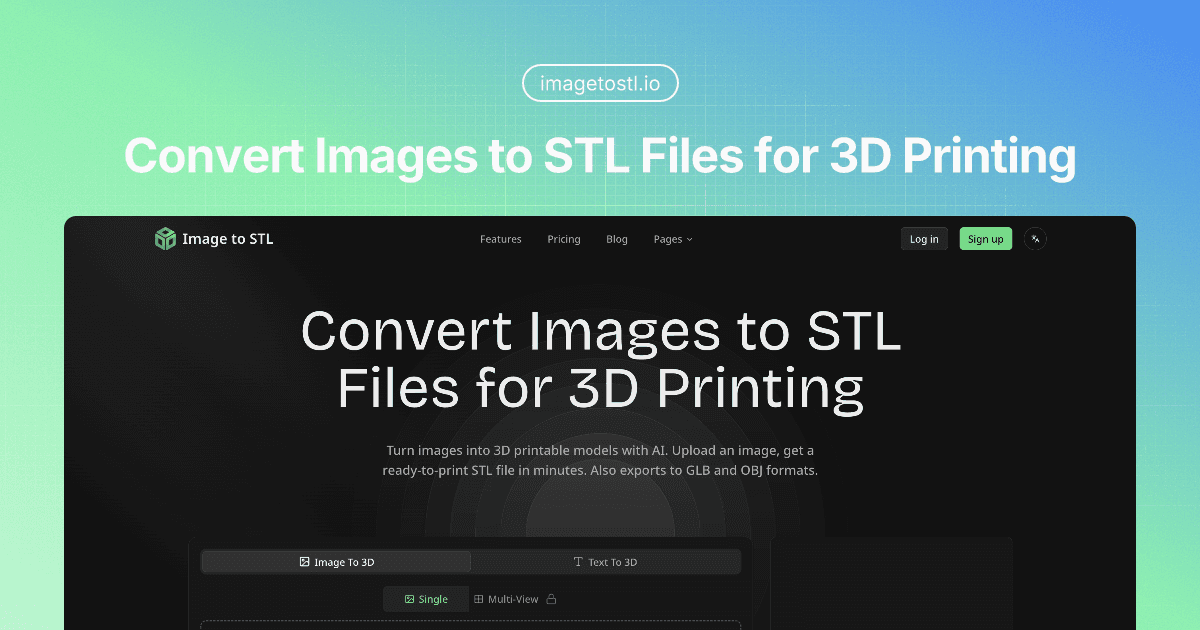
Overview Image to STL is an AI-powered online tool that transforms 2D images into 3D printable models.
It supports various image formats like JPG, PNG, and WebP, and allows users to export their creations in STL, GLB, and OBJ formats.
Key Features
- The service is designed to be user-friendly, enabling the generation of 3D models in minutes, suitable for a wide range of applications from 3D printing and game development to AR/VR experiences and e-commerce.
- Key Features * AI-powered conversion: Utilizes artificial intelligence to accurately convert images into 3D models.
- Multiple export formats: Supports STL for 3D printing, GLB for game engines and AR/VR, and OBJ for general 3D use.
- User-friendly interface: Simple upload and generation process requiring minimal technical expertise.
- The product can support both initial exploration and longer-term adoption by presenting capabilities in a way that is easier to review, compare, and operationalize across different stages of use.
Use Cases
- Teams can evaluate Image to STL when they need a more streamlined way to organize work, centralize execution, or improve consistency across repeated tasks and internal processes.
- Solo founders, operators, and marketers can use the product to reduce manual effort, sharpen visibility into what matters, and build a workflow that is easier to maintain over time.
- Quality options: Offers Standard, Pro, and Max quality settings for model generation.
- The product is especially useful during research-heavy buying journeys where clear documentation, visible feature framing, and a practical onboarding path influence whether a team moves forward.
Getting Started
- Visit https: //imagetostl. io and review the core product messaging, primary feature set, screenshots, or product examples to confirm whether the solution matches the problem you are trying to solve.
- Map the available functionality against your current workflow, team requirements, existing tools, and the type of outcomes you expect to achieve during an initial trial or pilot phase.
- Start with the most immediate use case first, validate the setup process, and document where Image to STL saves time, improves clarity, or removes friction from your current approach.
- Once the basics are working, expand usage gradually, involve the right stakeholders, and compare plan limits, support options, and integration depth before making a broader commitment.
Pricing & Plans
The product appears to follow a freemium model with an accessible starting point and room to unlock more advanced capabilities, higher usage limits, or premium workflows as needs grow.
For the most accurate pricing and packaging information, users should confirm the latest details on the official Image to STL website, including free access, trial options, plan tiers, usage caps, team features, and any implementation considerations that could affect ROI.
PBR support: Generates Physically Based Rendering materials for enhanced realism.